When you’re pregnant, it’s easy to assume that birth will just… happen. After all, people have been doing this forever, right?
While that’s true, modern birth comes with a lot more choices, interventions, and decision points than many families expect. That’s where childbirth education comes in — not to tell you how your birth should go, but to help you feel prepared, confident, and informed no matter how it unfolds.
As a doula, I’ve seen firsthand how much difference childbirth education can make.
Childbirth Education Isn’t About a “Perfect” Birth
One common misconception is that childbirth classes are only for families planning an unmedicated or low-intervention birth. In reality, childbirth education is for everyone — whether you’re planning an epidural, induction, scheduled C-section, or you’re truly undecided.
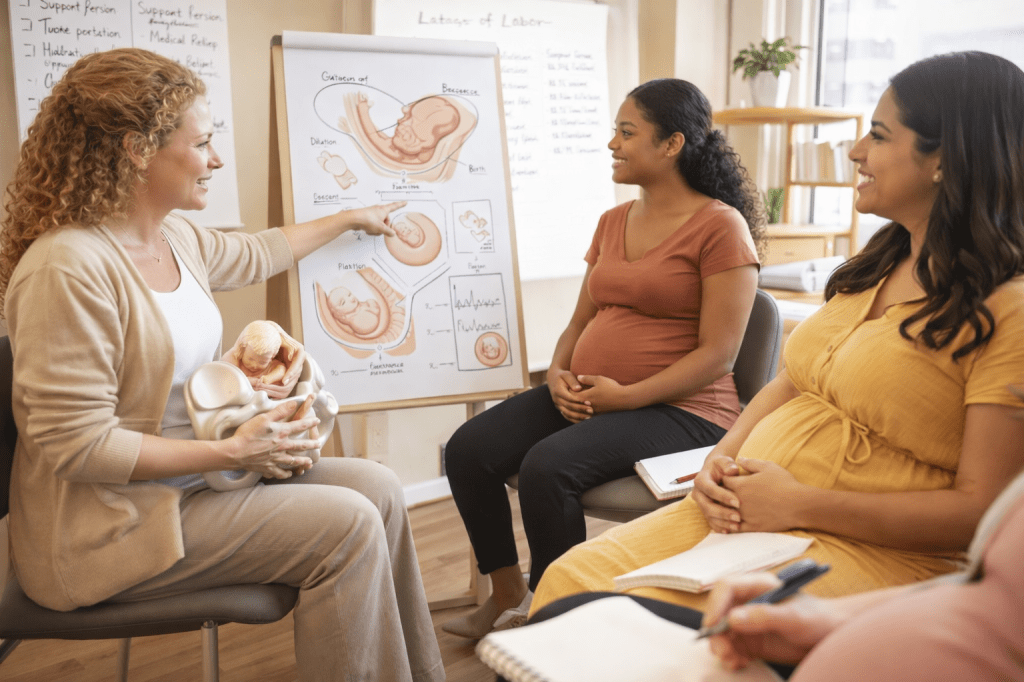
A good childbirth education class focuses on:
- How labor typically progresses
- Pain management options (both medical and non-medical)
- Common interventions and why they’re used
- How to communicate with your care team
- What to expect if plans change
Knowledge doesn’t lock you into one type of birth — it gives you flexibility.
Confidence Changes the Birth Experience
Fear of the unknown is one of the biggest stressors during labor. When families don’t know what’s happening or why decisions are being made, birth can feel overwhelming or out of control. Childbirth education helps replace fear with understanding.
When you recognize what’s normal, what’s optional, and what questions you can ask, you’re more likely to:
- Feel calmer during labor
- Advocate for your preferences
- Make informed decisions under pressure
- Look back on your birth feeling empowered — even if it didn’t go exactly as planned
Partners Benefit Just as Much
Birth partners often want to be supportive but aren’t sure how. Childbirth education gives partners concrete tools:
- How to support comfort and positioning
- What labor signs mean
- How to help communicate with providers
- When rest, reassurance, or hands-on support is most helpful
This shared understanding can strengthen connection and teamwork during labor and birth.
Education Complements Your Medical Care
Your OB or midwife is focused on medical safety — monitoring your health and your baby’s wellbeing. That role is essential.
Childbirth education fills in the gaps by addressing:
- The emotional and physical experience of labor
- Coping strategies and comfort measures
- The “why” behind routine procedures
- How to navigate decision-making in real time
Together, education and medical care create a more complete support system.
How a Doula Enhances Childbirth Education
While classes provide information, a doula helps you apply it. As your doula, I help you connect what you’ve learned to your unique preferences, concerns, and birth setting.
We talk through:
- What matters most to you
- How to advocate respectfully and effectively
- How to stay grounded if plans shift
- How to prepare for both birth and early postpartum
Education builds knowledge. Doula support helps you use it.
Childbirth education isn’t about controlling birth — it’s about understanding it. When families feel informed and supported, they tend to approach birth with more confidence, clarity, and peace.
If you’re pregnant and wondering how to prepare beyond reading articles or watching videos, childbirth education is one of the most valuable steps you can take.
If you want personalized guidance alongside that education, I’d love to support you.
You deserve to feel prepared, heard, and supported — every step of the way.
 Pinellas Doula Services
Leave a comment